
Ignite your curiosity with science in action
Come and join us for an evening of inspiring experiments and fun activities at our FREE event, Live Labs at the Warwick Christmas Lectures!
Meet our very own scientists and explore exciting science going on University of Warwick. The Live Labs will precede the Warwick Christmas lectures, allowing the future generation of scientists and innovators to get their hands on real-life experiments and fun activities!
Attending Live Labs is FREE. Tickets for the Warwick Christmas Lectures are available to purchase on the Warwick Arts Centre website for £6.00.
Live Labs run from 5:30pm - 7:00pm, Christmas Lectures start at 7:00pm
This event is aimed at ages 7+.
Check the activities we have in store below!
-
Come and learn about brown dwarfs - some of the most mysterious and peculiar objects in our Universe. As a result, scientists are required to use ingenious methods to detect these objects and study their properties. The Brown Dwarf Desert represents perhaps the most remarkable feature of these celestial objects.
-
Avoid falling into a black hole for as long as possible! Orbital Enemies is a video game where up to four players each take control of a planet. In the centre of the screen, a black hole grows and grows. Players will be able to feel the force of the black hole's gravity, plus the gravity of other planets. Use power-ups to help avoid the black hole, or to sabotage your opponents. Whoever survives longest wins! Orbital Enemies was programmed by a UoW staff member, using calculations similar to real astrophysics simulations.
-
Peer through a microscope and discover how different materials transform into samples ready for analysis.
-
Discover the wonderful world of bacteria and see how these microscopic organisms grow and divide. Use a microscope to observe these tiny organisms and learn about how exponential growth leads to single cells becoming visible colonies. Finally you can craft your own bacterial colony in a petri dish to take home with you!
-
We demonstrate interesting features of our Sun using hands on experiments with magnets and plasma balls. For example, sunspots and coronal loops visible in the Sun's dynamic atmosphere are related to the Sun's magnetic field - we demonstrate how similar patterns can be reproduced with magnets and iron filings.
-
Learn about symmetries and fractals, and create your own polyhedra to take home!
-
Light interacts with all parts of our lives. These demonstrations will show what is possible when we can control light to help solve the big science questions. Visitors will have the possibility to control lasers, view Christmas themed images and explore what glows in the dark from their kitchen.
-
This interactive tabletop demonstration explores the journey of microplastics from the useful materials we rely on every day to their unintended presence in the environment. This activity invites participants to become “formulation scientists” discovering how polymer chemistry shapes the materials around us and how these same materials can be transformed into microplastics.
-
Which material do you think is best at carving ice - plastic, steel, aluminium, copper, or diamond? Come along and find out!
-
Come along and find out how the principles of air pressure work to control liquid flow.
-
You may think that only robots use electrical activity to control their actions, but we also use electrical signals to control our bodies. Come and see how electrical activity controls your heart, muscles and brain. Then record your own electrical activity - and see what happens when you undertake some Christmas-themed tasks. Learn how the brain produces the electrical signals that control everything you do and think, and what happens when these signals go wrong. It’s going to be electrifying!
-
How can we prevent the spread of disease during a major outbreak? Participants will learn how outbreaks can be controlled by a range of interventions we call Public Health and Social Measures (PHSMs). These measures include social distancing, contact tracing and the use of vaccines. Participants will first see how flu spreads in a (literal) toy population if we "do nothing", before playing an interactive game where they try to spread the flu among toy people which adopt PHSMs. Through this game we demonstrate how each measure reduces the total number of toy people infected during the outbreak.
-
This activity will introduce participants of all ages to the amazing world of bones and skeletons. We’ll look at how we can study bones to read the story of an animal’s life, and think about why this is so exciting for understanding ecology and our own biology. You’ll have the opportunity to handle real animal bones in our blind mystery box, ask questions about human anatomy, and even get a peek inside bones through some of our next-generation 3D x-ray scans!
-
How does sunlight hitting solar panels generate the electricity that comes out of our plug sockets? Learn how solar panels make electrical current flow through a circuit, with a demonstration based on water and gravity.
-
DNA in the environment like water, soil or air can give us a snapshot of what is living there, without being able to see it! This can be used to track creatures like invasive species to help us protect endangered native ones. In this activity, you will explore how we 'fish' for DNA in the environment and how this has helped us protect the UK native White Clawed Crayfish right here on the University of Warwick campus.
-
Ready? Set? Paint! You'll paint a design onto card using an "invisible paint" - a mixture of baking soda and water. Next, you'll paint over your design with a special purple pigment taken from... red cabbage! Watch closely and you'll see your invisible painting suddenly come to life with a vibrant colour change!
Is it magic? Nope - this transformation happens because of something called pH. We'll show you how the baking soda and red cabbage pigment interact, turning your simple painting into a surprising work of science. You can take your secret design home with you! -
The ‘E’ in STEM – engineering – is out in force to explore what happens when you take the science out of the textbook and put it into the real world. Leave behind the equations and observe the properties of objects around us, explore how we can change how materials behave, move, or feel, and create energy with your bare hands. Hear from experts from both WMG and the School of Engineering.
-
This fun and interactive session, “Think Smart, Eat Smart!”, helps children learn how different foods affect their brain and body. Through a Brain–Food Match game, they’ll discover which foods boost memory, focus and energy, and which slow the brain down. The activity combines simple science explanations, colourful cards, and hands-on engagement to inspire children to make healthy food choices and think like young scientists!
-
We will demonstrate superconducting magnetic levitation of high-temperature superconductors cooled to cryogenic temperatures using liquid nitrogen.
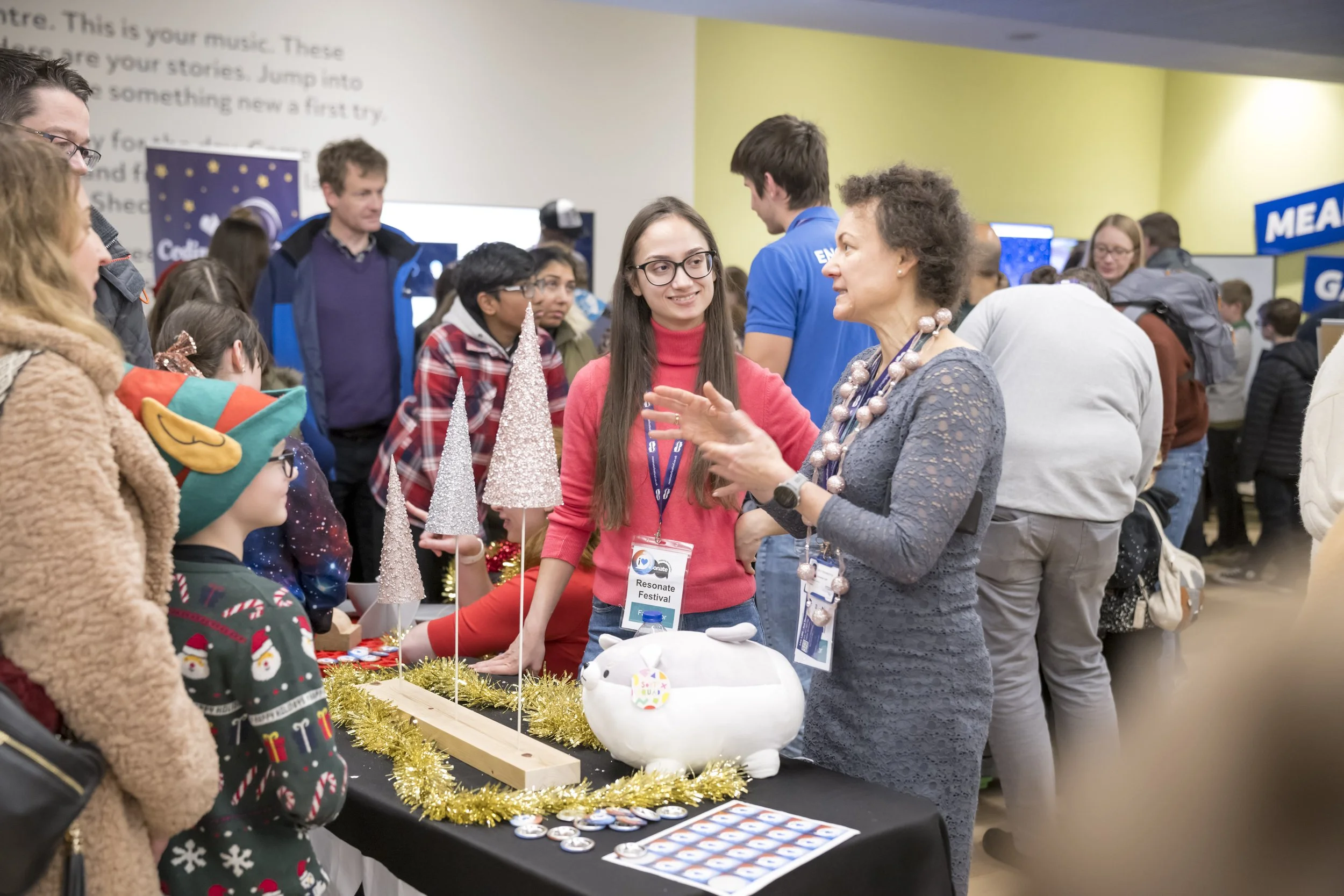
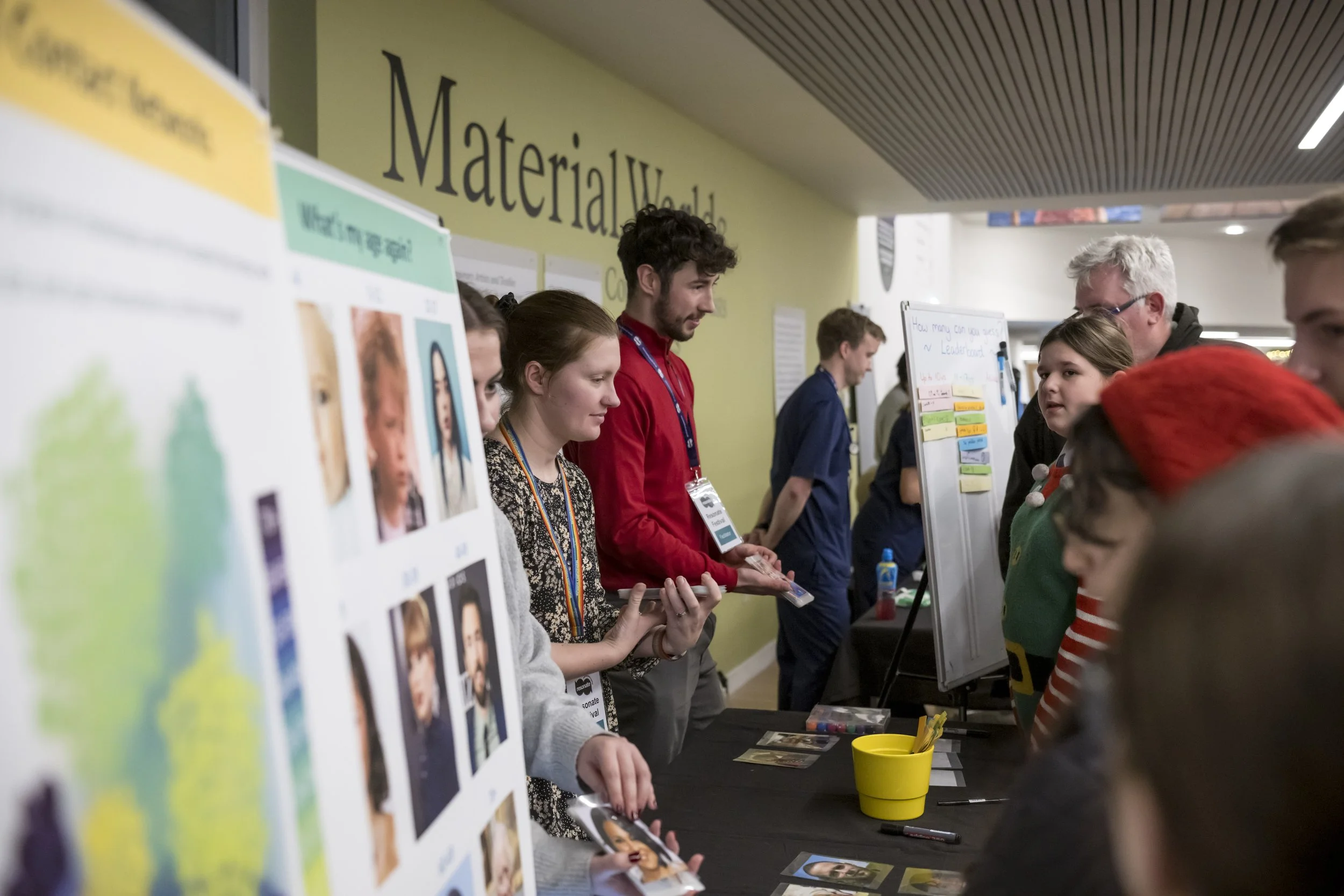
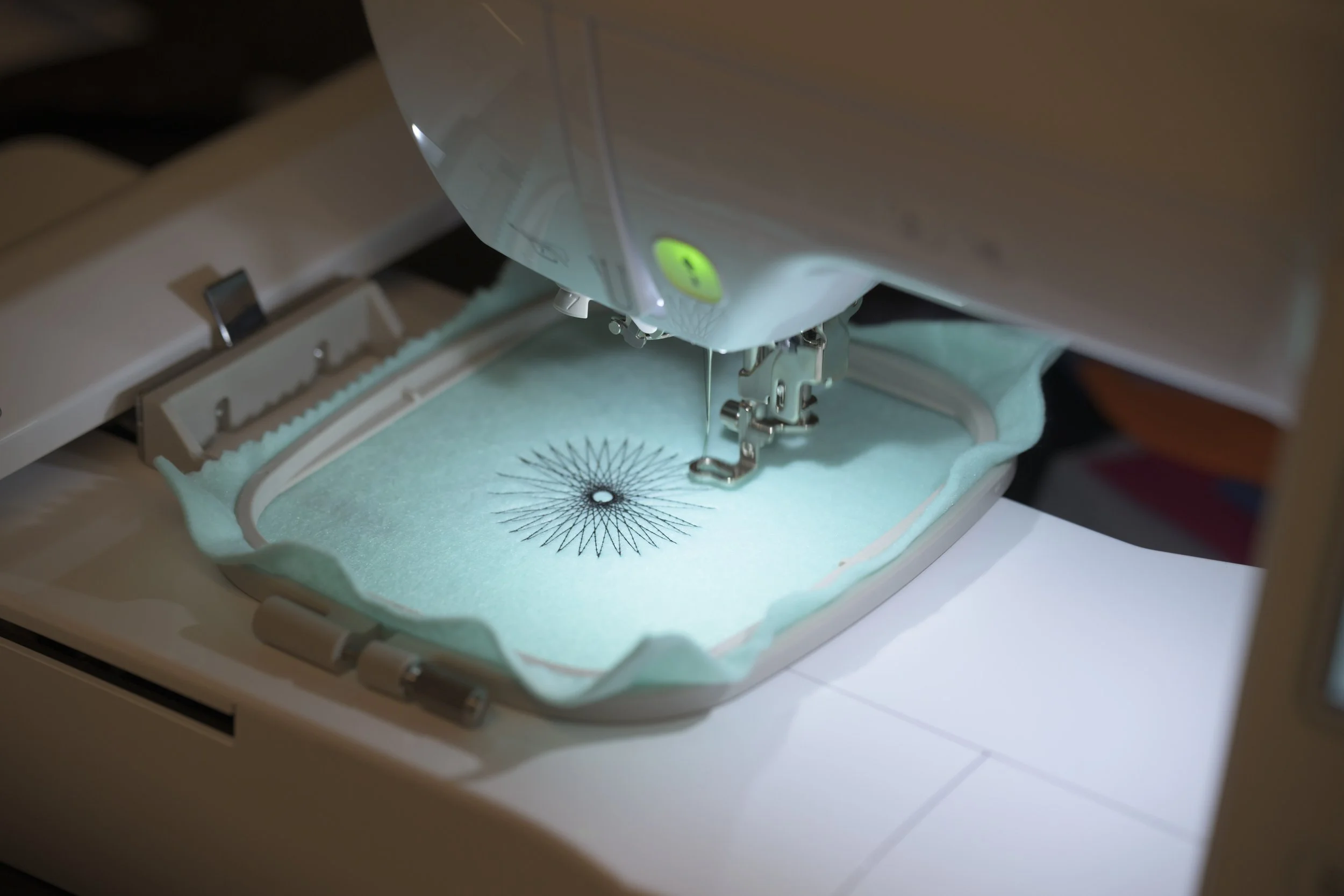
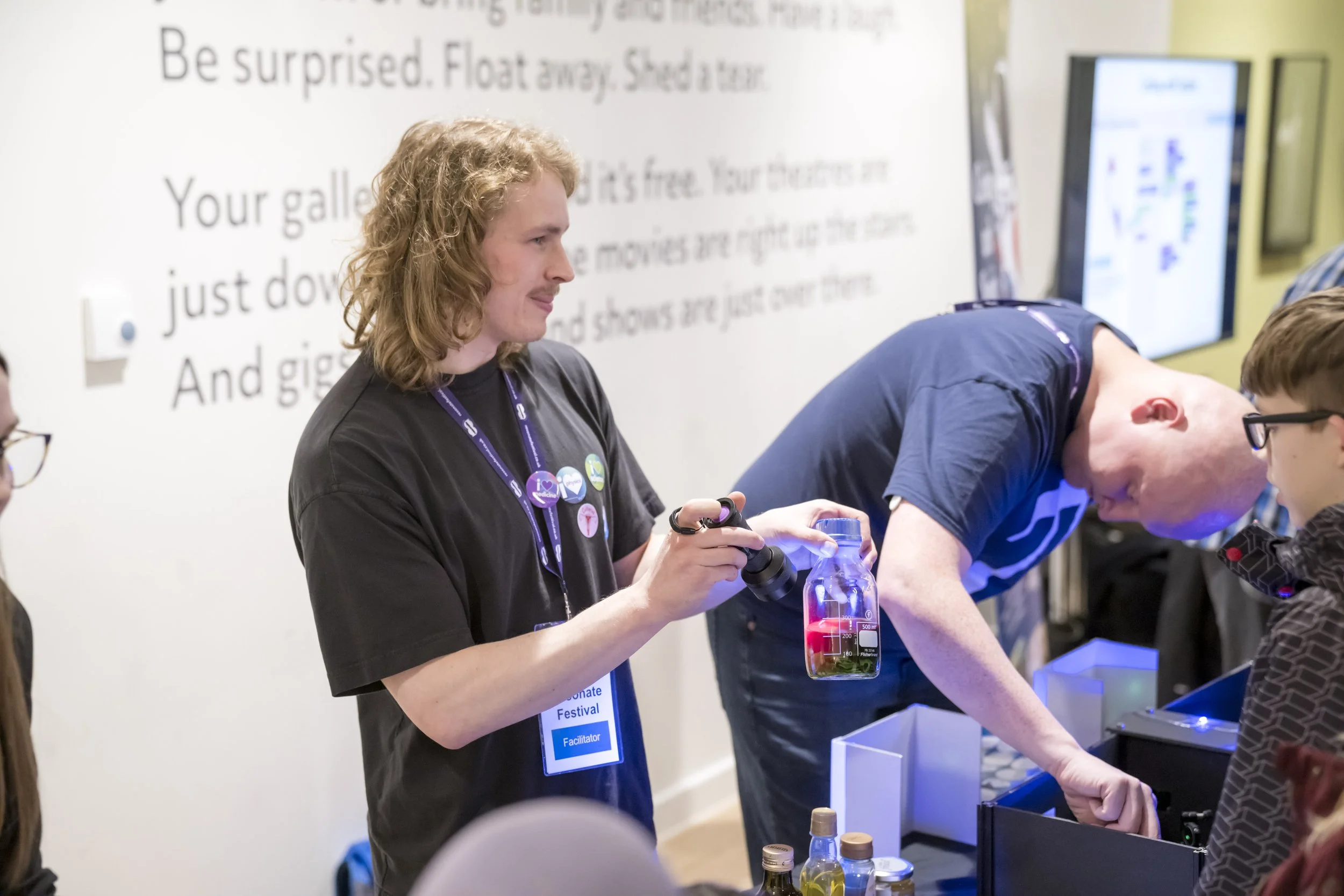
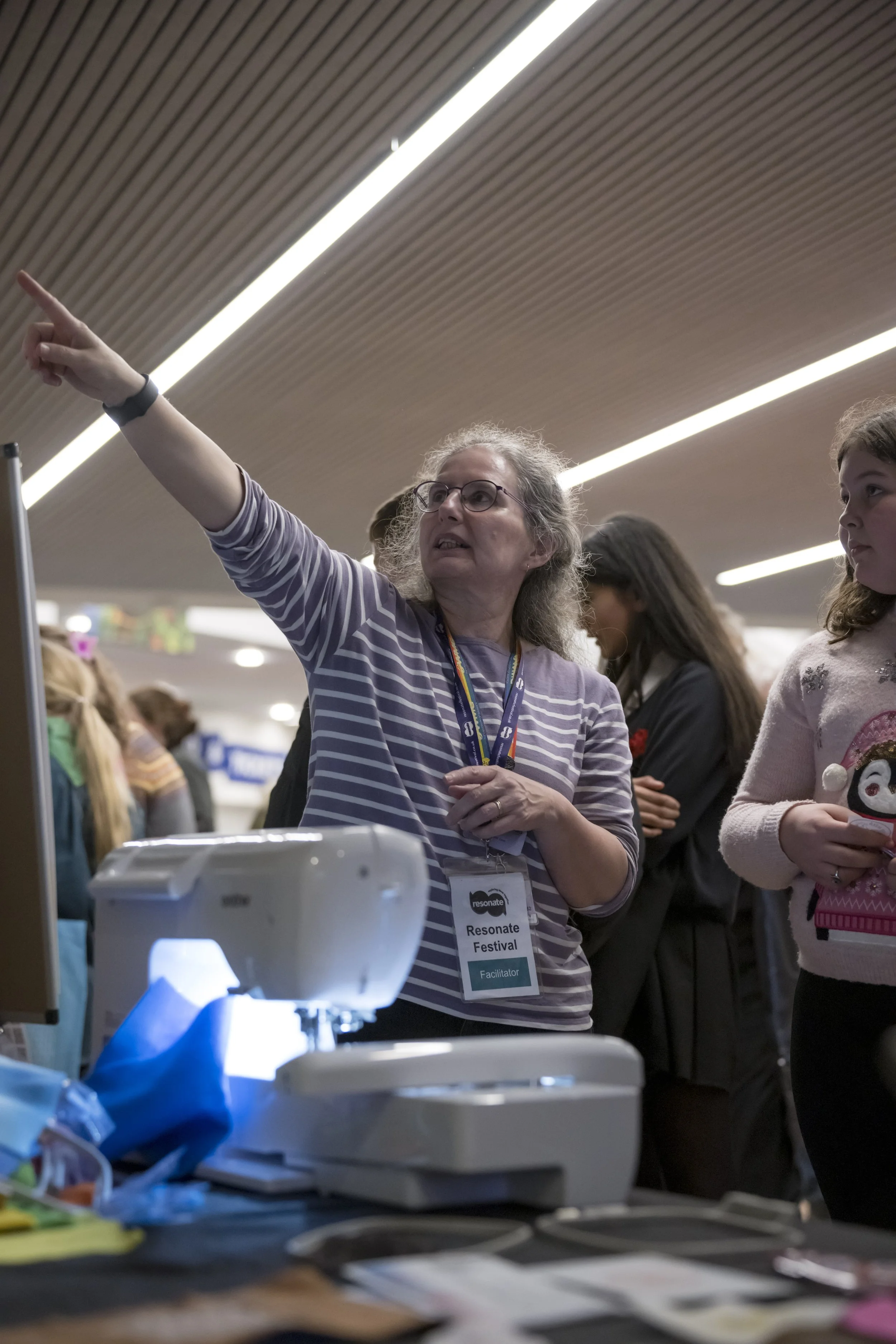
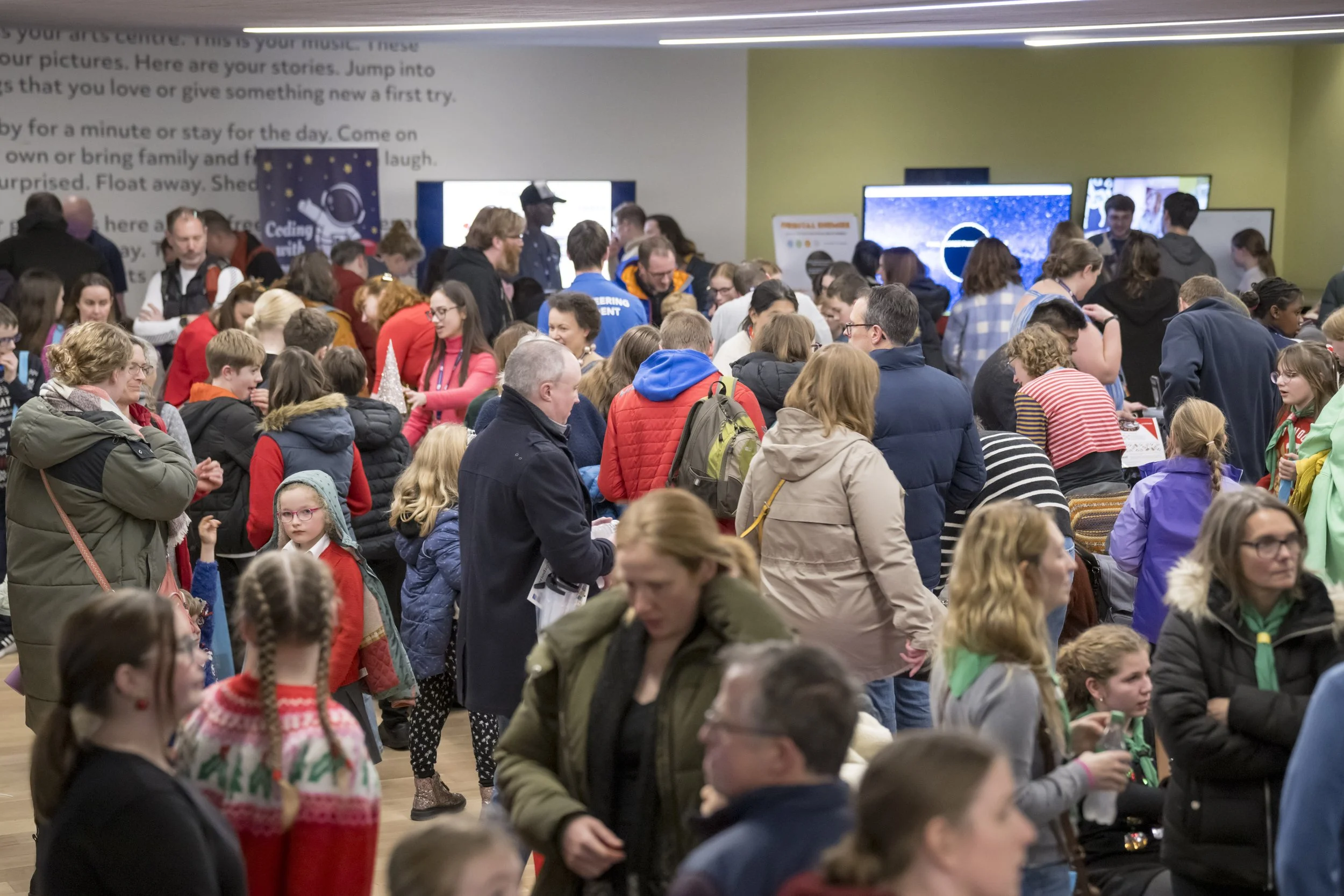
Take a look at some of the photos from Live Labs 2024 below
Resonate supports the United Nations Global Sustainable Development Goals. The symbols below indicate which of the 17 goals this event aligns with.
