Live Labs 2025
On the evenings of the 26th November and 10th December 2025, science came to life in the Warwick Arts Centre foyer at another wonderful year of Live Labs! We got hands-on with lots of fun demonstrations and exciting activities from our very own Warwick staff and students before more scientific fun took centre-stage at the Warwick Christmas Lectures organised by the Department of Physics, Warwick Arts Centre and China Plate Theatre.
We contemplated the night sky with undergraduate student Callum Hodge, learning about the mysterious celestial Brown Dwarf desert. We then very nearly got sucked into a black hole and avoided meteor storms, playing as a planet in Dr Andy Buchan’s video game Orbital Enemies. Before leaving space, we took a trip to our dynamic sun with Professor Anne-Marie Broomhall, learning about the suns magnetic field with plasma balls and magnets.
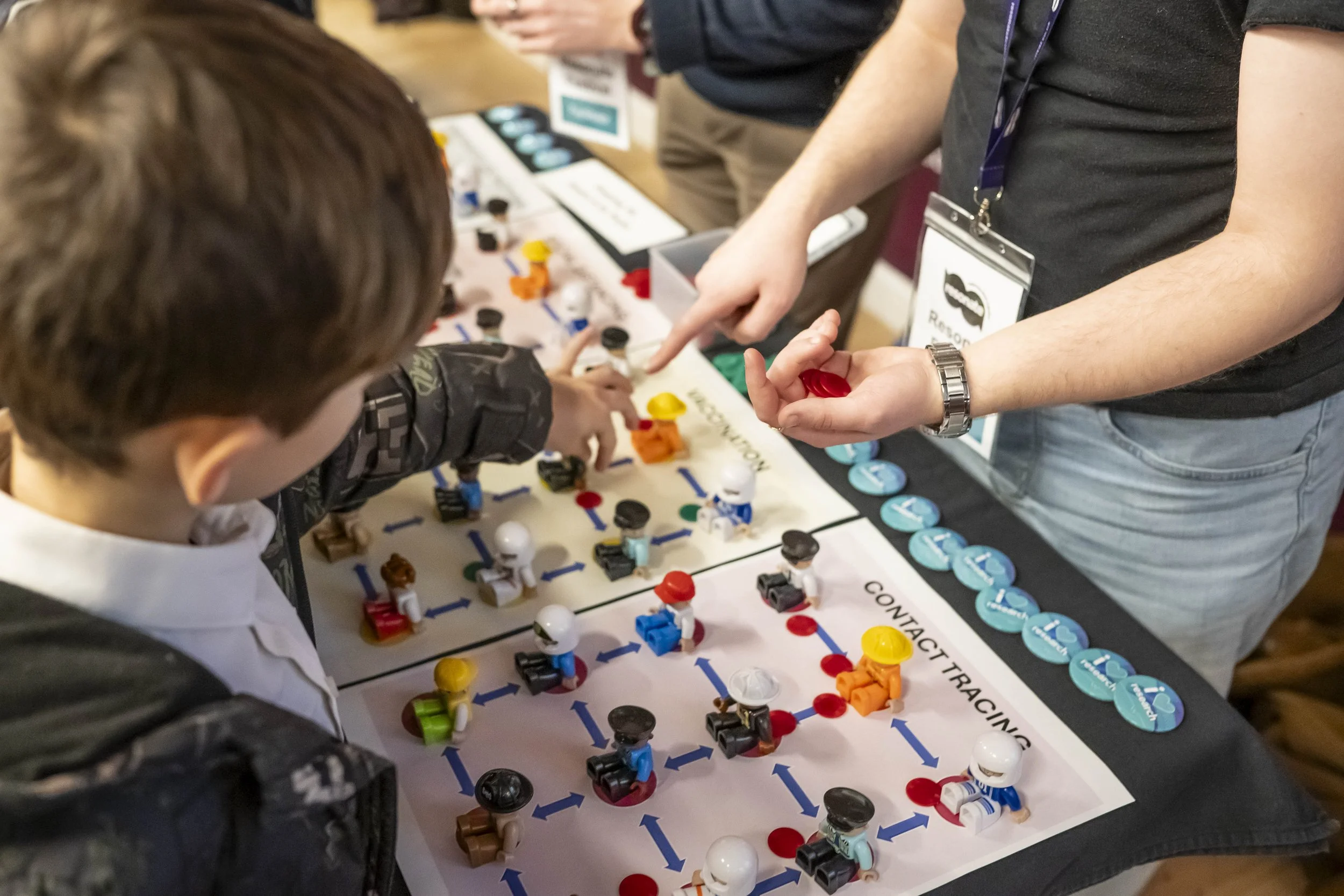
Next, we played a game with PhD student Nathan Doyle to learn how to stop flu season in its tracks. It showed us how disease outbreaks can be controlled by a range of interventions and measures, helping toy people to avoid the spread!
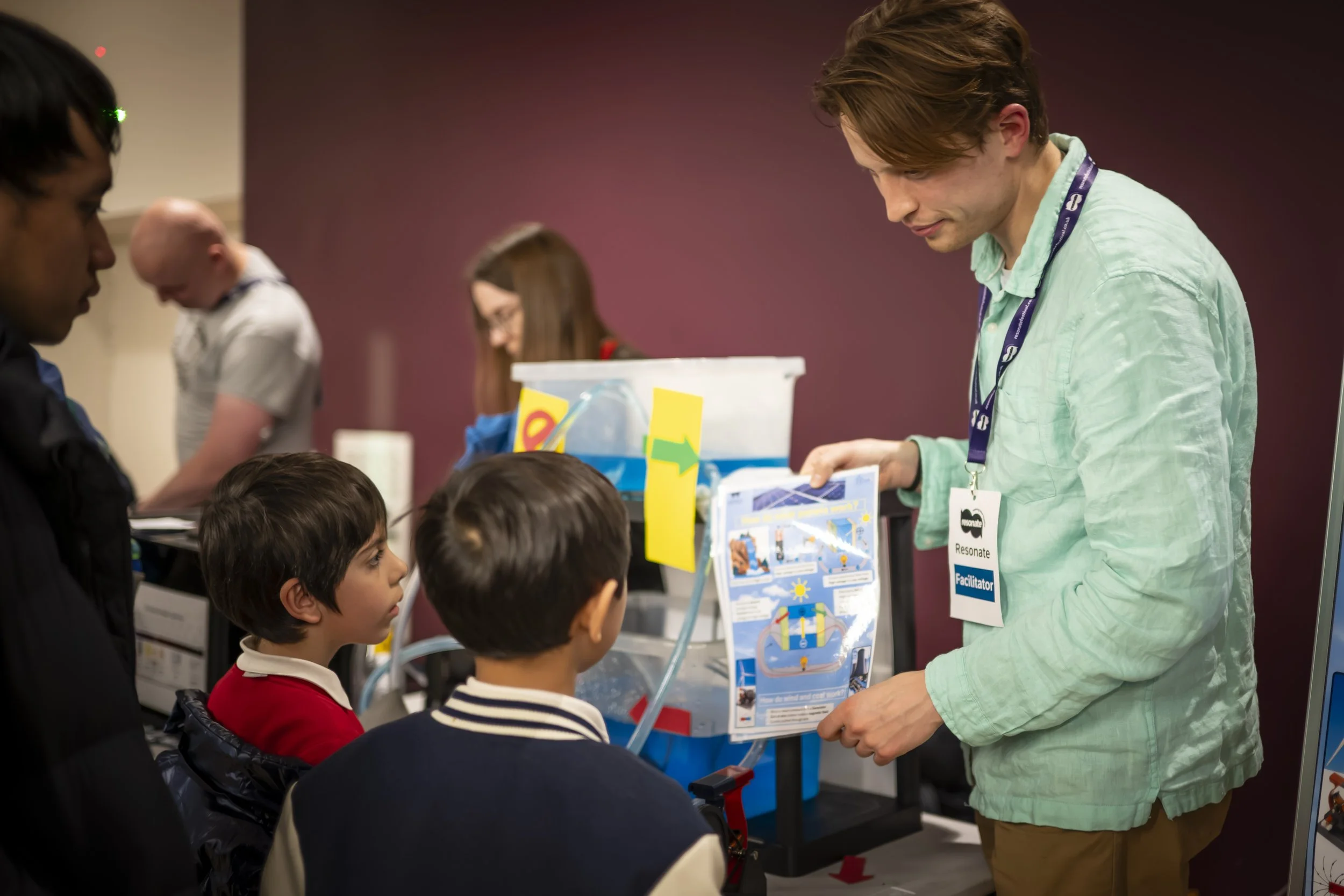
Dr Jack Woolley and his team lit up the foyer with Christmas themed lights and lasers, giving everyone the chance to have a go at controlling the lasers and showing us items that have the potential to glow in the dark in our kitchens. Then Dr Edward Butler-Caddle showed us how solar panels work with an exciting waterfall demonstration.
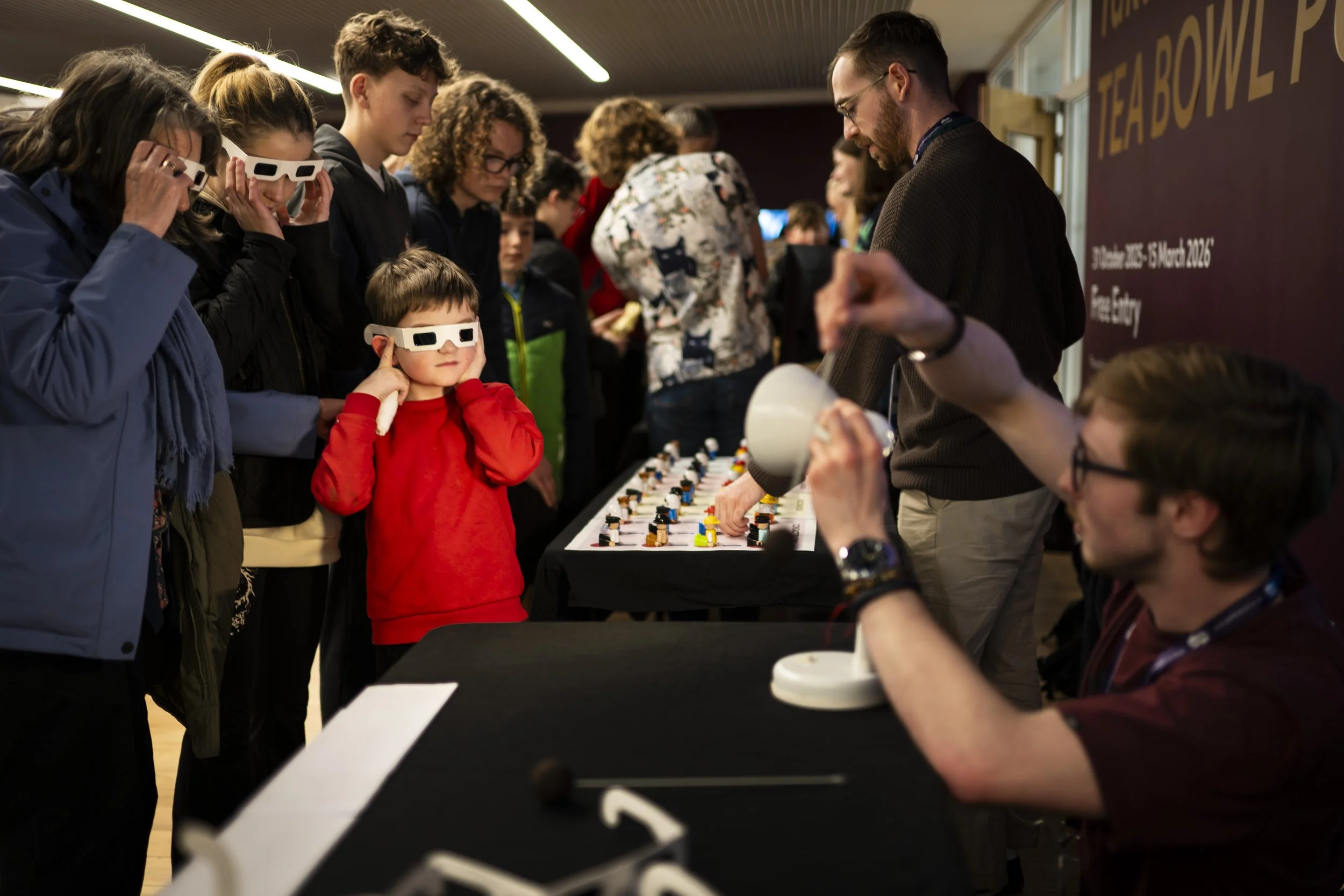
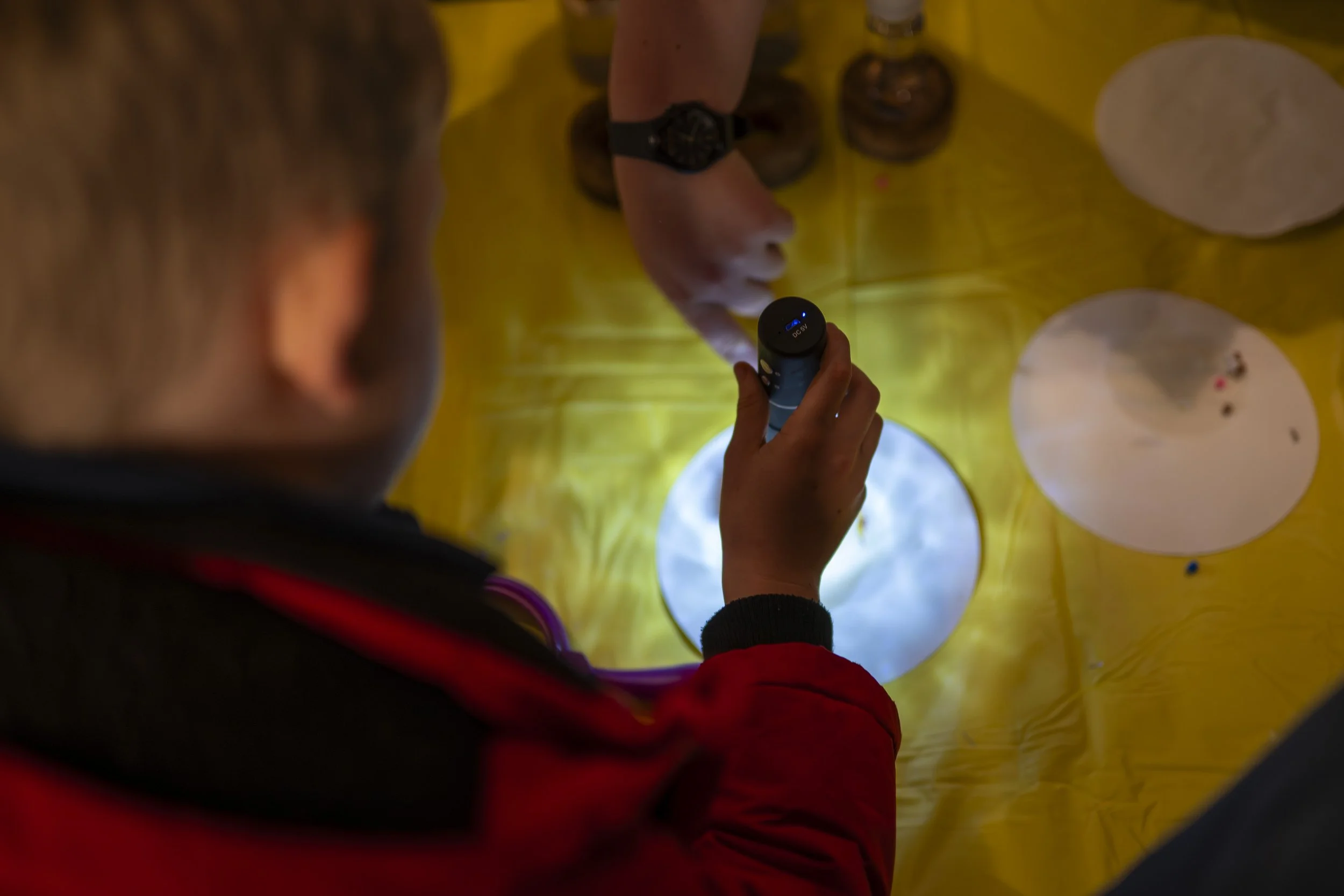
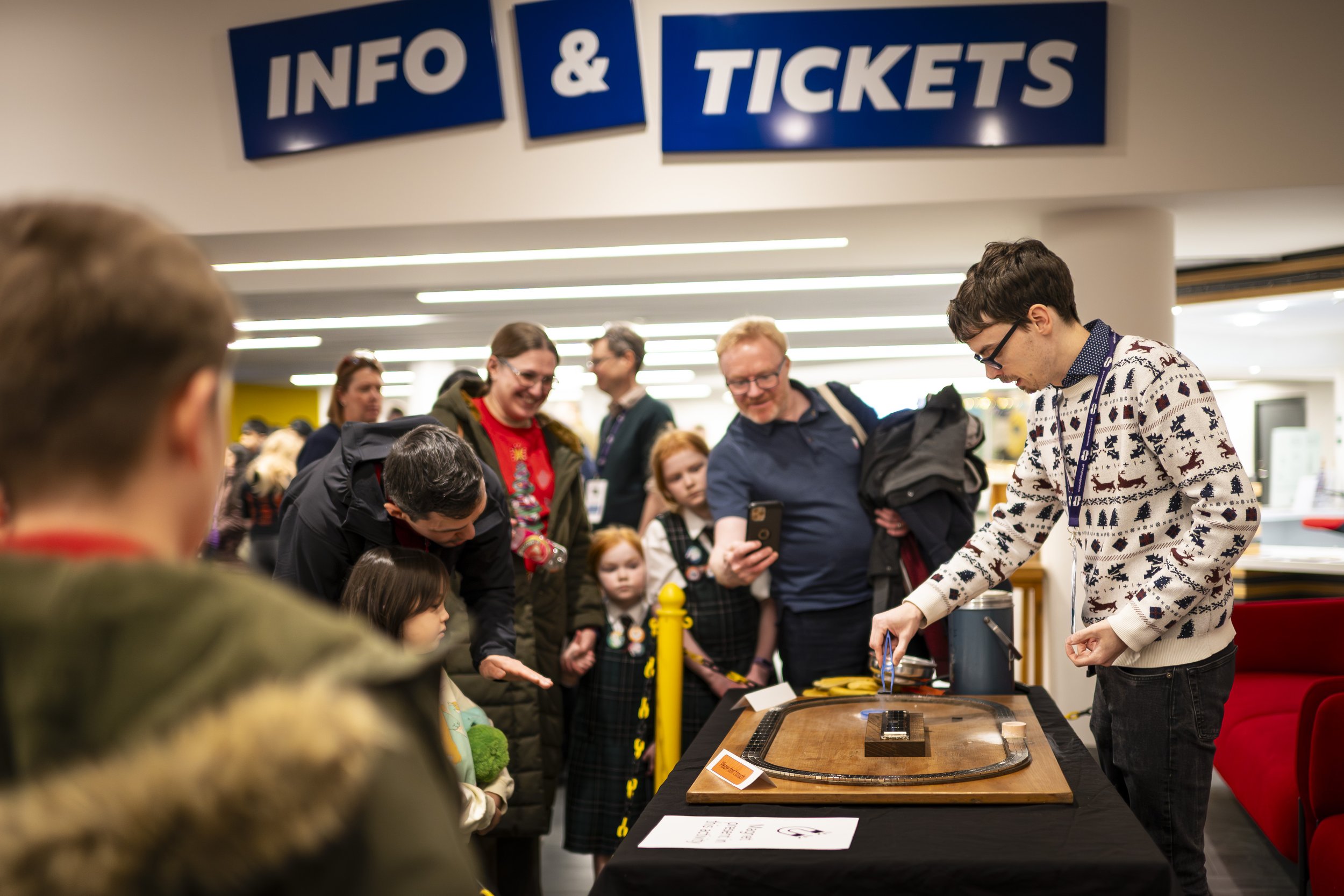
If we couldn’t explain the mystery of how one teapot can pour three different different liquids, we can now! PhD student Anhad Bagga showed us how the infamous Assassins Teapot uses principles of air pressure to control the flow of liquids. Anything you can imagine could happen at Live Labs, as up next, we witnessed science that seems like magic! Professor Paul Goddard demonstrated how magnetic levitation works through his superconducting levitating train activity, using high-temperature superconductors cooled to cryogenic temperatures.
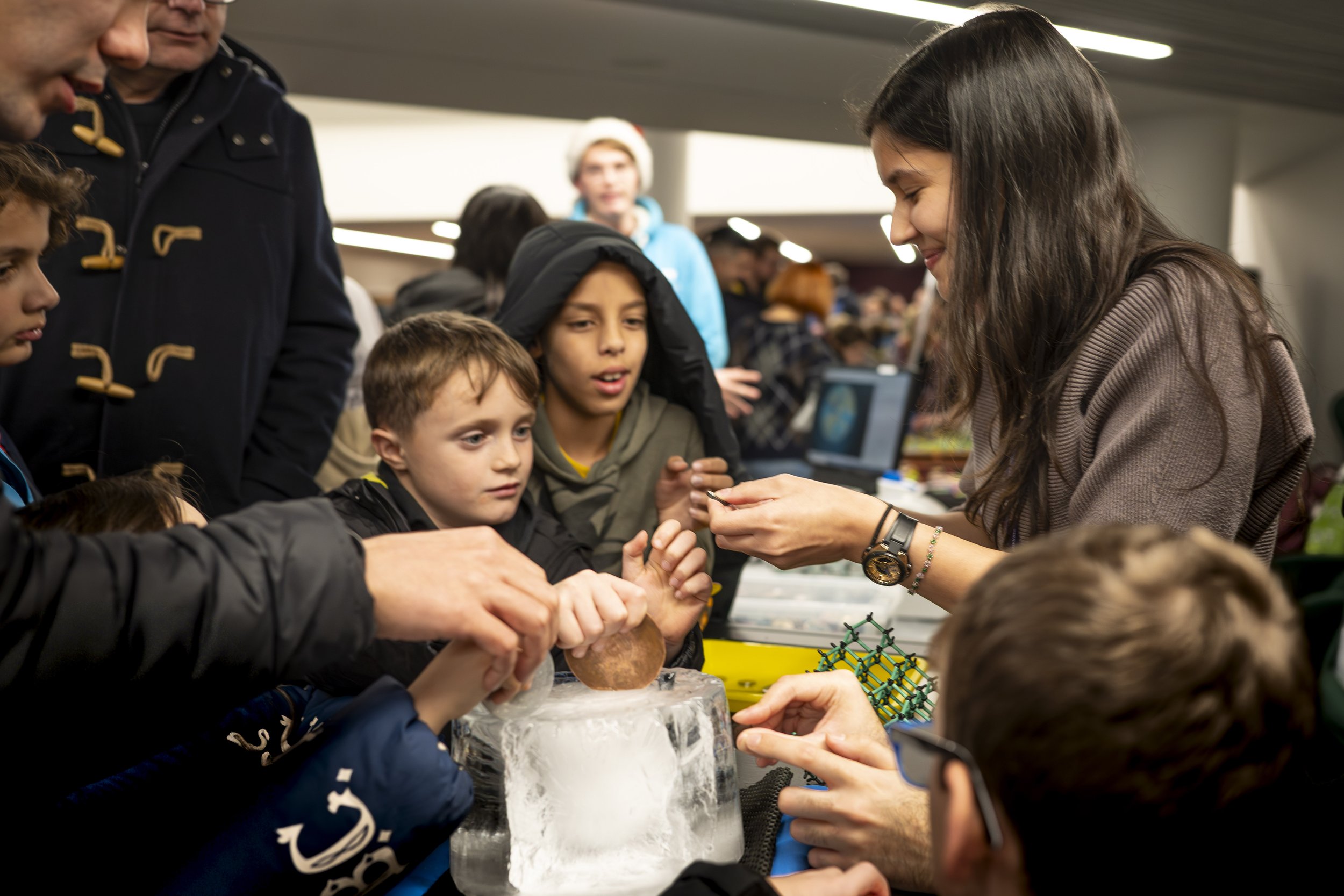
What do you think works best at carving ice? Plastic, steel, aluminium, or… diamond? PhD student Cameron Hunter and his team brought these along to let us have a go carving ice to find out the answer!
Feeling very curious by now, we became microplastic detectives with PhD students Alex Fletcher and Mars Poxon, fishing for plastic and then trying to discover where it came from and how materials around us can be transformed into microplastics.
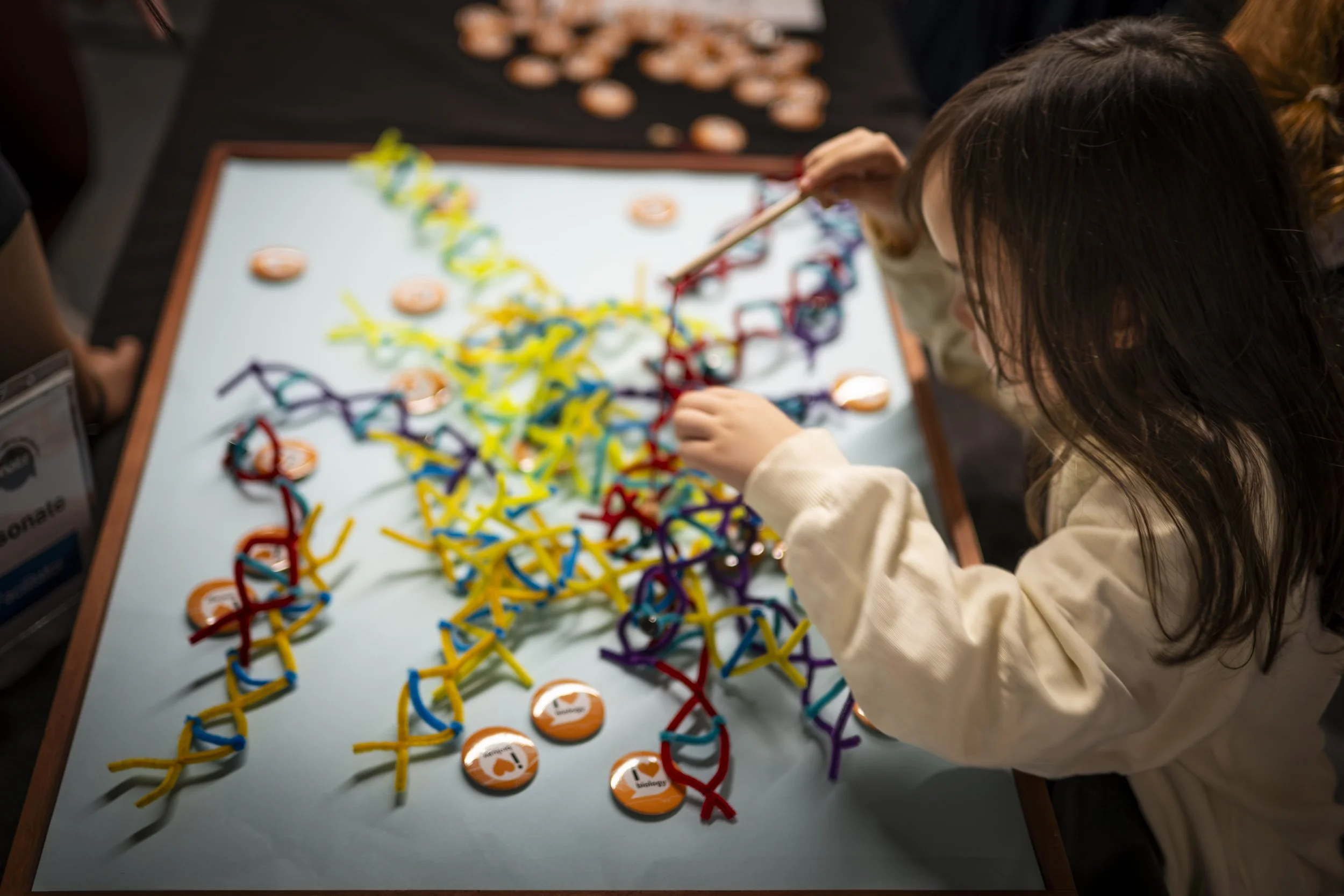
Dr Molly Williams and the Sustainability Team introduced us to the wonderful world of crayfish! We used magnetic fishing rods to ‘fish’ for DNA in the environment, learning how this helps us to protect the UK’s native White Clawed Crayfish, which can be found right here on the University of Warwick campus!
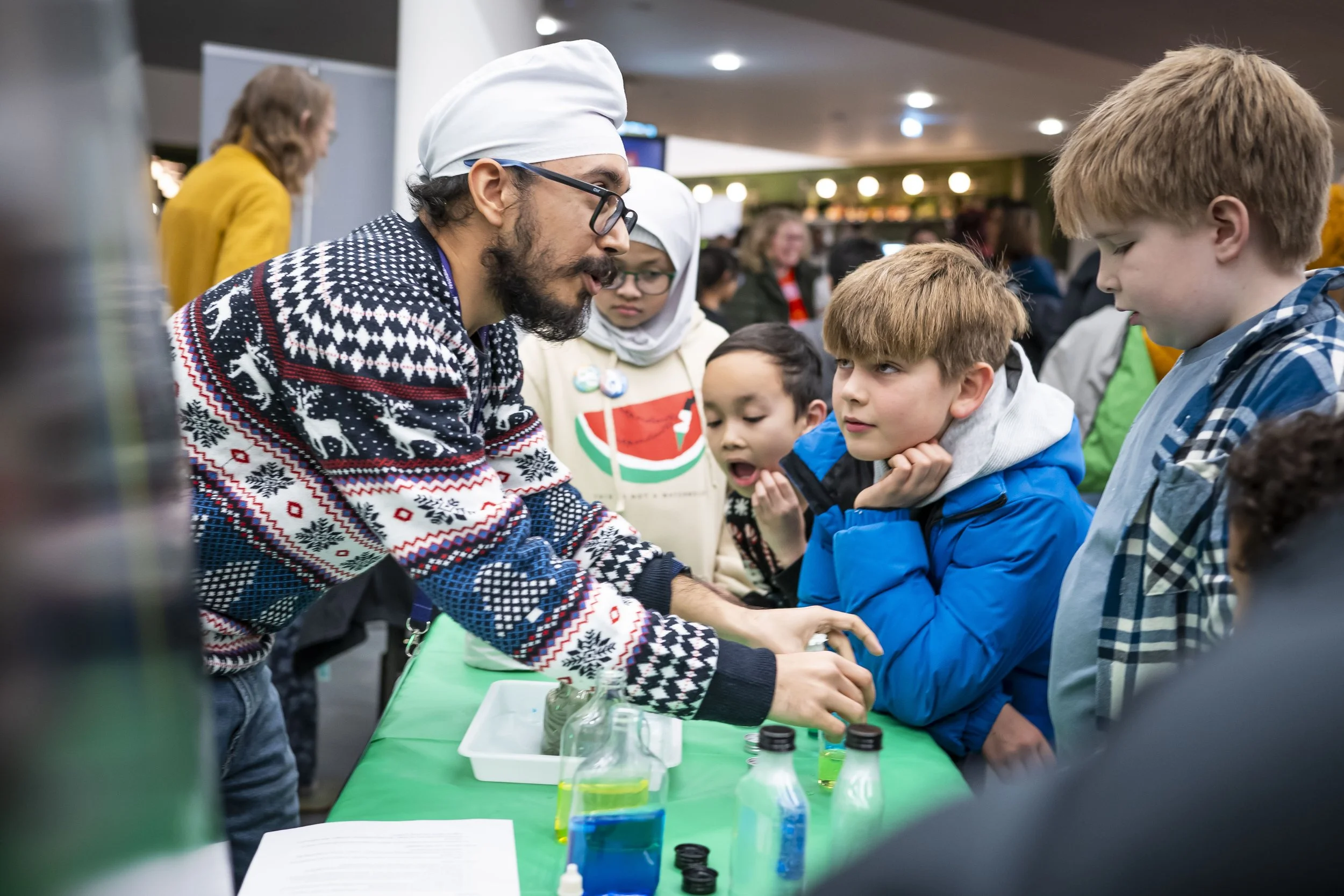
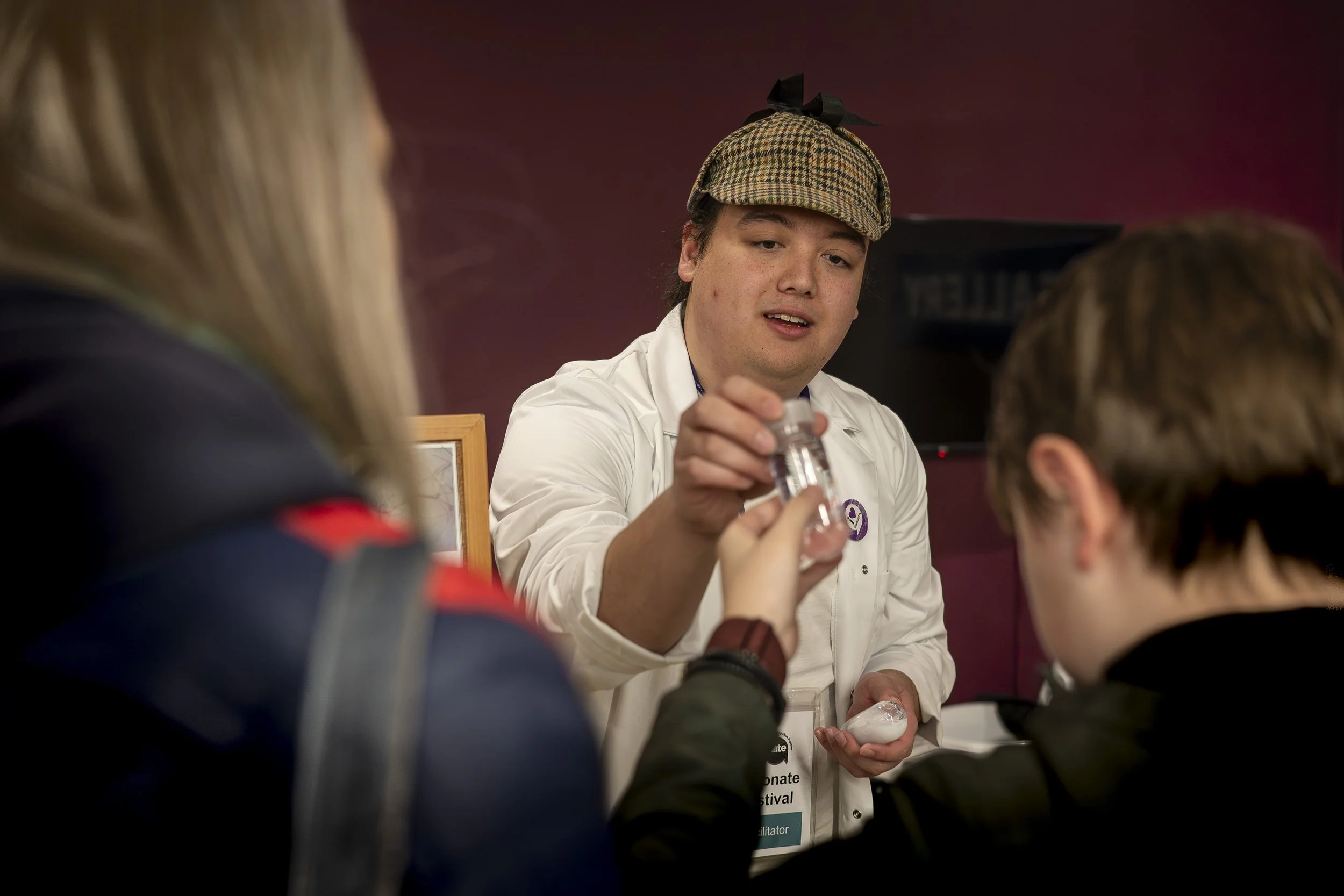
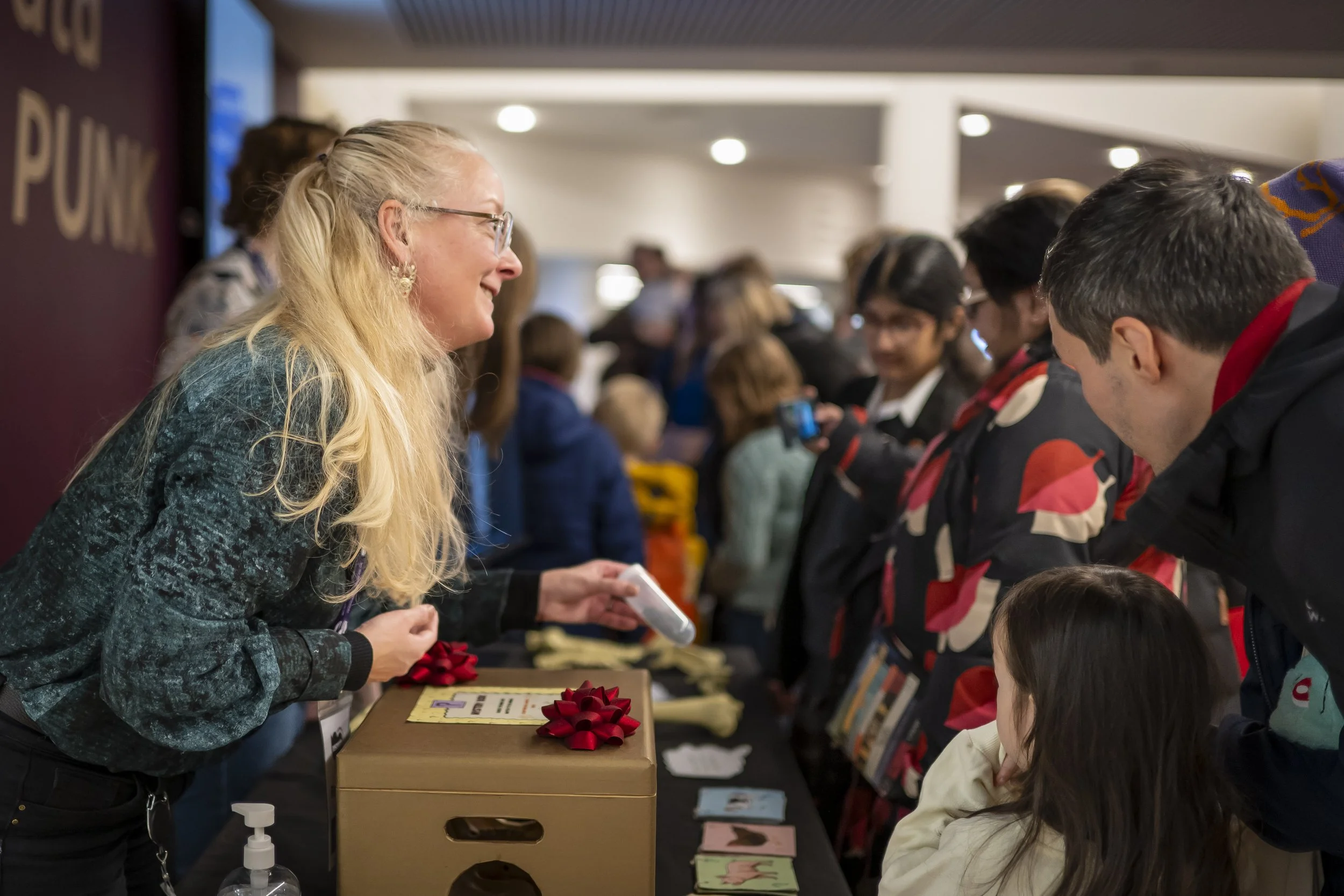
Then we wandered over to PhD student Charlotte Lawrence’s activity supported by her team from WMG. They showed us how we can study bones and skeletons to read the story of an animal’s life, and how this can help us to understand our own biology. We even had the chance to peek inside bones through 3D x-ray scans. We then met Laboratory Technician John Gallagher from WMG, who helped us to discover how different materials transform into samples ready for analysis. We peered through a microscope at items such as toy cars and coins.
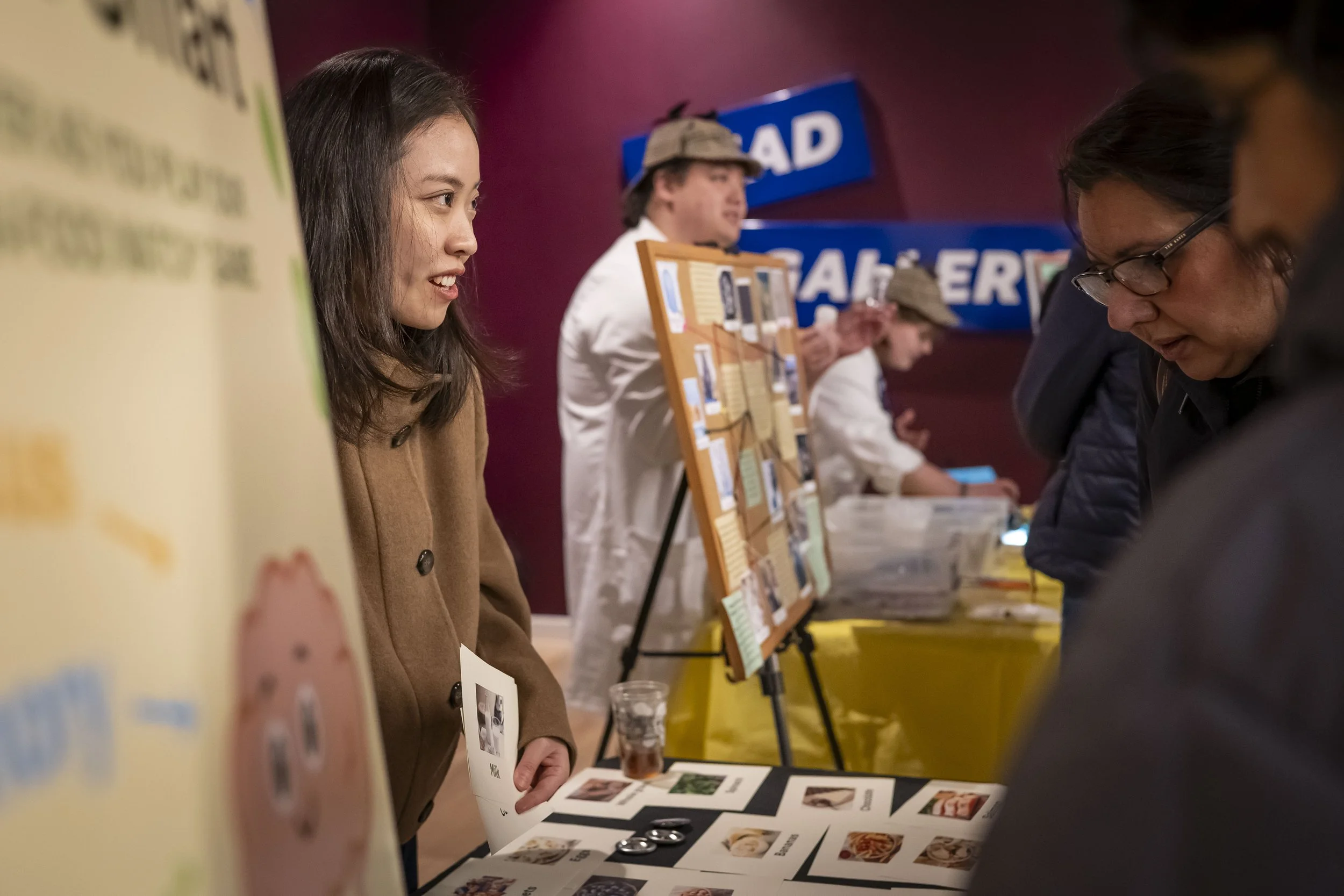
Dr Ruohan Zhang’s activity showed us how we can think smart and eat smart! We played a brain food matching game, helping everyone to understand which foods boost memory, focus and energy, and which slows the brain down. It was fascinating to discover how science informs your favourite treats!
We knew that robots are electric, but did you know that we are too? Dr Dawn Collins and team showed us how electrical signals control our bodies, and we learned how the brain produces electrical signals that control everything we do and think. It was electrifying! The Engineering Zone, hosted by Dr Phil Jemmet, Dr Oksana Trushkevych, the School of Engineering and WMG gave us the space to explore what happens when you take science out of the textbooks and into the real world. We witnessed how we can change how materials behave, move, or feel, and how we can create energy with our bare hands.
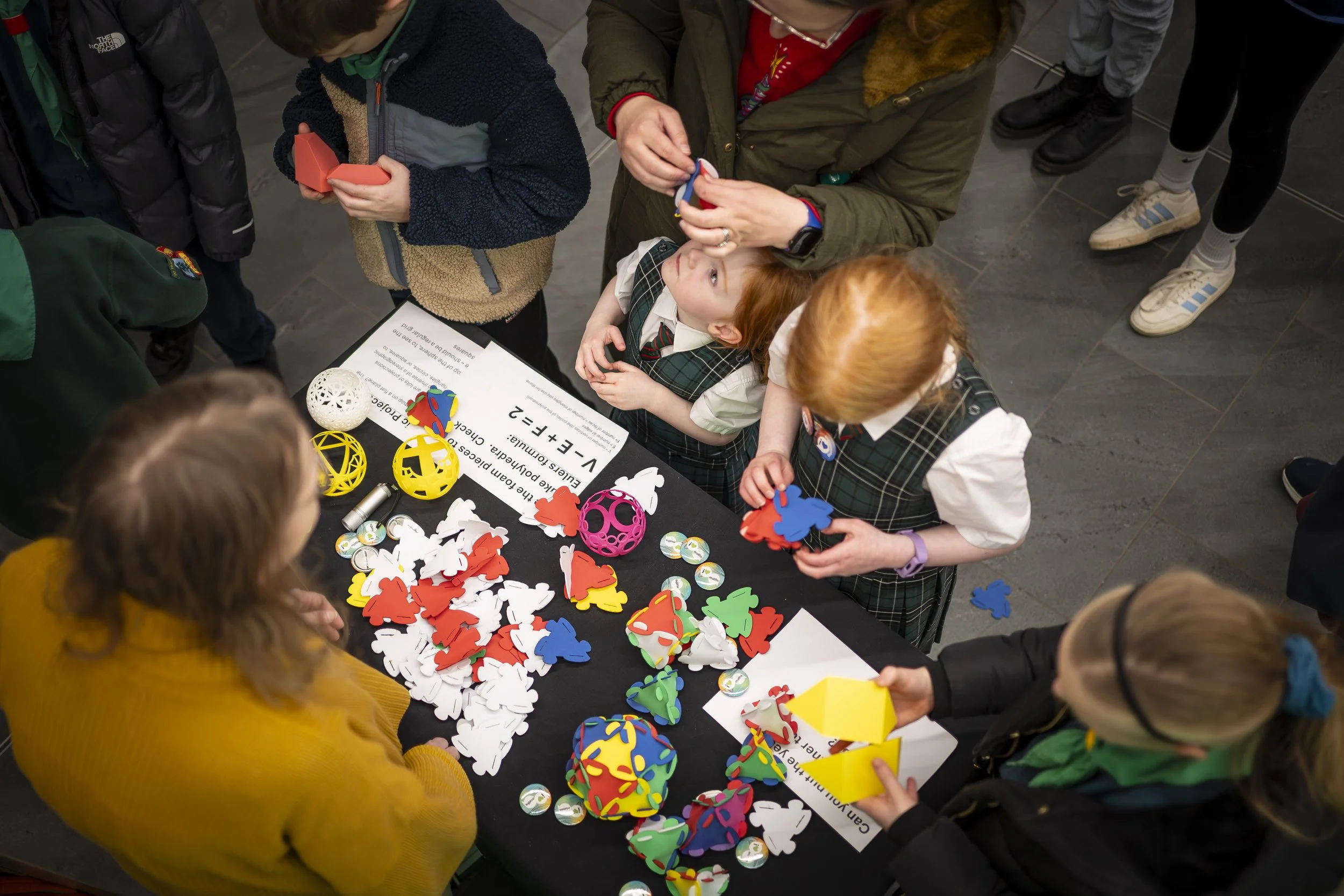
We decided to get crafty by having a go at painting with… cabbage?! We watched invisible designs come to life with a vibrant colour change as undergraduate student Rand Almuqham explained how pH works to turn a painting into a work of science and art. PhD student Joe Ratcliff and team then showed us the hidden world of bacteria, and we made our very own bacterial colonies to take home with us! Finally, we popped over to Dr Helena Verrill to have a go at some maths crafts, making polyhedra and learning about symmetries and fractals.
We learned so much and had a brilliant time. We can’t wait to see you at another event soon!